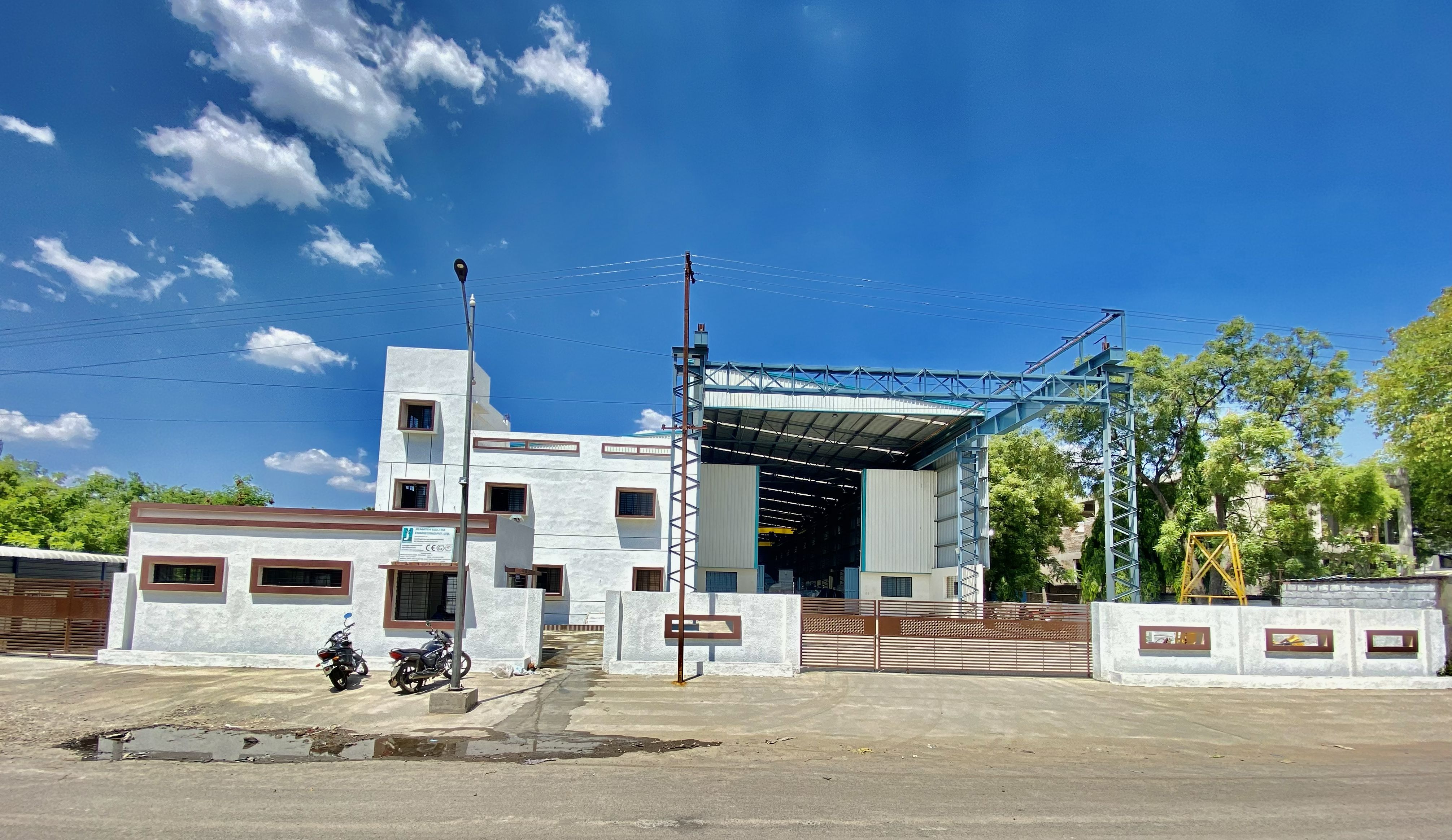
High-integrity centrifugal containment-ventilation fan on the Jitamitra shop floor
Home  /  Industries  /  Defence & Nuclear
Industries

Fans for defence & nuclear — where containment comes before flow.

A defence or nuclear facility runs fan duty where the air is usually clean but the consequence of a leak is not: controlled-area and containment ventilation held under a fixed negative pressure, HEPA exhaust downstream of the filter bank, and seismic-qualified extract that must keep running when everything else stops. The gas is rarely hot or dirty — but the fan has to be leak-tight, redundant and fully documented, and it has to prove all three on paper before it ever runs. We engineer to that discipline, and the underlying fan engineering is proven across our range: a handful of executed defence & nuclear duties, built within the same envelope below — to 2,00,000 CMH, 2,000 mmWC, 400 HP and 600 °C.

Zone-negativecontainment held under draft
HEPAdownstream of the filter bank
N+1redundant by design
Seismicqualified & documented
15,000+
fans built since 2011
200 HP
VFD test rig · IS 4894 / AMCA 210
99%
on-time delivery
3
working days to quote — always
CONTAINMENT NEGATIVE · HEPA EXHAUST · REDUNDANT DUTY/STANDBY · SEISMIC-QUALIFIED
Where the fans sit

One facility, three jobs the fans have to do — and none of them may fail quietly.

Across a defence or nuclear facility the fans do three distinct jobs: they hold the controlled areas and containment under a fixed negative pressure, they move air through the HEPA filter banks so nothing escapes unfiltered, and they stand ready to keep extract running through a fire or an emergency. The air is usually clean, so efficiency and quiet matter — but the fan is a barrier as much as a mover, and a leak-tight, redundant, documented machine is the whole point.

The duties we run in the facility

The fan duties across a defence or nuclear facility — and the role each one plays.

A controlled facility needs a spread of fan duties, from the steady containment extract to the emergency smoke fan that runs once and must run then. We have executed a handful of defence & nuclear duties across this list — each engineered to its own pressure, leak class and documentation scope, not adapted from a catalogue near-fit.

The fans we deploy here

Three clean-air fan types cover the facility — chosen for efficiency, quiet and a stable curve.

Because the air is usually clean, the wheel is chosen for efficiency and a well-behaved curve, not for shedding dust: an aerofoil wheel for the highest efficiency on large clean-air extract, a backward-curved plate wheel for the robust general and HEPA duty, and a backward-flat plate wheel where a rugged, easily inspected blade earns its place. All three build across the same envelope — to 2,00,000 CMH, 2,000 mmWC, 400 HP and 600 °C.

Why defence & nuclear fan duty is hard

Three things in a controlled facility decide whether the fan is trusted with the containment — none of them is flow.

Defence and nuclear duty inverts the usual fan problem: the air is clean, but the fan is a safety barrier, and it is judged on leak-tightness, redundancy and documentation — not on the duty point. Engineer for all three and the fan is a containment component the facility can qualify and trust for its life. Engineer for performance alone and it leaks past the containment, fails without a standby, or arrives without the paper it must have to be accepted at all.

01 — CONTAINMENT

Casing leak-tightness

A containment fan holds the room below atmosphere — often −25 to −250 Pa — so any out-leak past the casing, shaft seal or joints puts unfiltered air where it must never go. A standard bolted casing that seeps is not a containment fan, whatever its curve says.

How we engineer it out

A welded, pressure-tested casing built and leak-tested to a stated tightness class; a shaft seal (stuffing-box or mechanical) selected for the leak class; gasketed, torque-controlled access joints; and a documented leak-rate test on the finished fan before it leaves the floor.

02 — REDUNDANCY

No single point of failure

In a controlled area a stopped extract fan opens the containment — so a single failure is not tolerable. Yet a mismatched duty/standby pair, or a fan that cannot ride a bearing warning to a controlled swap-over, is a single point of failure hiding in plain sight.

How we engineer it out

Matched duty/standby (N+1) fans built to one convention so either can carry the duty; conservative bearing life (L10h sized long); vibration and temperature monitoring provisions for condition-based swap-over; and construction that lets a wheel or bearing be serviced without breaching the running train.

03 — QUALIFICATION

Seismic & full documentation

A defence or nuclear fan is only as good as the paper behind it — material traceability, weld and NDT records, a seismic qualification for the mounting, and a full data book. A fan that performs but cannot be documented and qualified cannot be accepted into the facility at all.

How we engineer it out

Material test certificates and heat traceability on the pressure boundary; documented welds with NDT to the specified extent; a seismic-qualified support and hold-down design to the stated response spectrum; and a complete data book — GA, calculations, test and balance reports — issued for review before dispatch.

How we design for the facility

Every leak class, redundancy and qualification choice is documented on the GA drawing you sign off — before we cut metal.

We don't sell a catalogue near-fit into a controlled facility. Each fan is engineered to its own duty — the containment extract to its leak class, the HEPA fan to its loaded-filter static, the smoke fan to its rated temperature and time — at your operating point, with the documentation scope agreed up front.

  • Leak-tight containment construction — A welded, pressure-tested casing leak-tested to a stated tightness class; shaft seal (stuffing-box or mechanical) selected for the class; gasketed, torque-controlled access joints and a documented leak-rate test — so the fan holds the containment negative (often −25 to −250 Pa) instead of seeping past it.
  • Redundancy & long service life — Matched duty/standby (N+1) fans on one convention so either carries the duty; bearing life sized long (L10h conservative) with vibration and temperature monitoring provisions for condition-based swap-over; balanced to ISO 21940 G6.3 as standard, G2.5 / G1.0 on application for the quietest running.
  • HEPA, emergency & corrosion scope — Curve sized to the loaded HEPA bank so hood face velocity holds as filters load; smoke / fire extract rated to hold flow at 250–300 °C for a stated time; and corrosion-resistant metallurgy — 316L or higher alloys — on decontamination and corrosive-gas circuits where the wetted surfaces demand it.
  • Seismic qualification & full data book — Material test certificates and heat traceability on the pressure boundary; documented welds with NDT to the specified extent; a seismic-qualified support and hold-down to your response spectrum; and a complete data book — GA, calculations, and the in-house performance and balance reports — issued for review before dispatch. A handful of executed defence & nuclear duties stand behind the convention.
Standards & conformity

Stated precisely — because procurement checks.

What our marks mean, in the words that survive an audit.

Performance

Tested to the AMCA 210 / ISO 5801 method, in-house on our 200 HP VFD rig. Tested-to-method — not AMCA-certified.

Quality system

ISO 9001:2015 — third-party certified. Our only third-party certification.

CE conformity

Self-declared per 2006/42/EC + 2014/35/EU (Module A). A self-declaration, not a notified-body certificate.

ATEX conformity

Self-declared, Zone 2/22, Category 3, per 2014/34/EU, where the area classification calls for it.

Oil & gas duty

Designed and built to API 673 as project-specific scope.

Welding

ASME Sec IX qualified welders + WPS for every joint.

Balance

ISO 21940 — G6.3 minimum, G2.5 / G1.0 on application.

Vibration

ISO 20816 evaluation; ISO 14694 for fan-specific limits.

Questions engineers ask

Defence & nuclear fan questions, answered straight.

Can you make a fan leak-tight enough to serve as a containment barrier, and prove it?
Yes. We build a welded, pressure-tested casing and leak-test it to a stated tightness class, select the shaft seal (stuffing-box or mechanical) for that class, and gasket and torque-control the access joints. The finished fan gets a documented leak-rate test before it leaves the floor, so you receive a measured leak figure, not an assumption. Tell us the leak class and the containment pressure and we engineer the casing and seal to it — a containment fan is a barrier first and a mover second.
How do you handle redundancy so a single fan failure never opens the containment?
We supply matched duty/standby (N+1) fans built to one engineering convention, so either machine carries the full duty and a swap-over is seamless. Bearing life is sized conservatively (a long L10h), and we provide vibration and temperature monitoring provisions so a warning triggers a controlled change-over rather than a trip. Construction lets a wheel or bearing be serviced without breaching the running train. Redundant by design — a single failure is engineered out, not hoped away.
Can the fan be seismically qualified, and what documentation comes with it?
Yes. We design and document a seismic-qualified support and hold-down to your stated response spectrum, and issue a complete data book — GA drawing, design calculations, material test certificates with heat traceability on the pressure boundary, documented welds with NDT to the specified extent, and the in-house performance and balance reports. The data book is issued for your review before dispatch. A fan that performs but cannot be documented and qualified is of no use in a controlled facility, so we agree the documentation scope up front.
How do you keep the HEPA exhaust and fume-hood extract working as the filters load?
We size the fan on the loaded filter bank, not a clean one, so the curve still delivers the required static as the HEPA resistance climbs and hood face velocity holds through the filter life. The fan sits downstream of the HEPA stage on clean air, so the wheel is chosen for efficiency and a stable, non-overloading curve. Give us the clean and dirty filter resistances and the face-velocity target, and we engineer the duty point across the loading range rather than at one point.
The air is clean here, so which fan do you pick and why not a dust-type wheel?
Because the gas is clean, we pick for efficiency, low noise and a well-behaved curve rather than for shedding dust. An aerofoil wheel gives the highest efficiency and lowest noise on large clean-air containment and HEPA extract; a backward-curved plate wheel is the robust, non-overloading general and HEPA workhorse; and a backward-flat plate wheel suits corrosive or emergency extract where a rugged, easily inspected blade matters more than peak efficiency. A rugged dust-type radial would just cost you efficiency and noise you do not need to spend here.
Do you performance-test the fans, and what about AMCA, CE, ATEX and quality certification?
Every fan is performance-tested in-house to the AMCA 210 / ISO 5801 method on our 200 HP VFD test rig, and dynamically balanced to ISO 21940 G6.3 as standard (G2.5 / G1.0 on application). To be precise: that in-house testing is to the AMCA 210 / ISO 5801 method, not AMCA-certified, and we are not an AMCA member; CE is self-declared per 2006/42/EC and 2014/35/EU, and ATEX Zone 2/22 is self-declared per 2014/34/EU (Category 3) where the area classification calls for it — those are self-declarations of conformity, not third-party certifications. Our only third-party certification is ISO 9001:2015. Any facility-specific quality or nuclear-grade programme requirements we treat as project-specific scope, agreed and documented up front.

Across the range

Where Defence & Nuclear fits — the fans we deploy, the duties we run, and adjacent industries.

The same engineering, viewed three ways — by fan family, by duty, and by industry. Follow the cross-references.

Take it further

Specs an engineer can use — not a brochure.

Engineer to engineer

Send us the duty point.
We'll quote in 3 working days — always.

No model numbers needed. Give us the operating conditions — flow, static, gas temperature, composition, particulate, and any tender standard — and our application engineers size the fan and quote it. Attach a spec or GA if you have one.

+91 90110 09155  ·  mihir.jitamitra@gmail.com