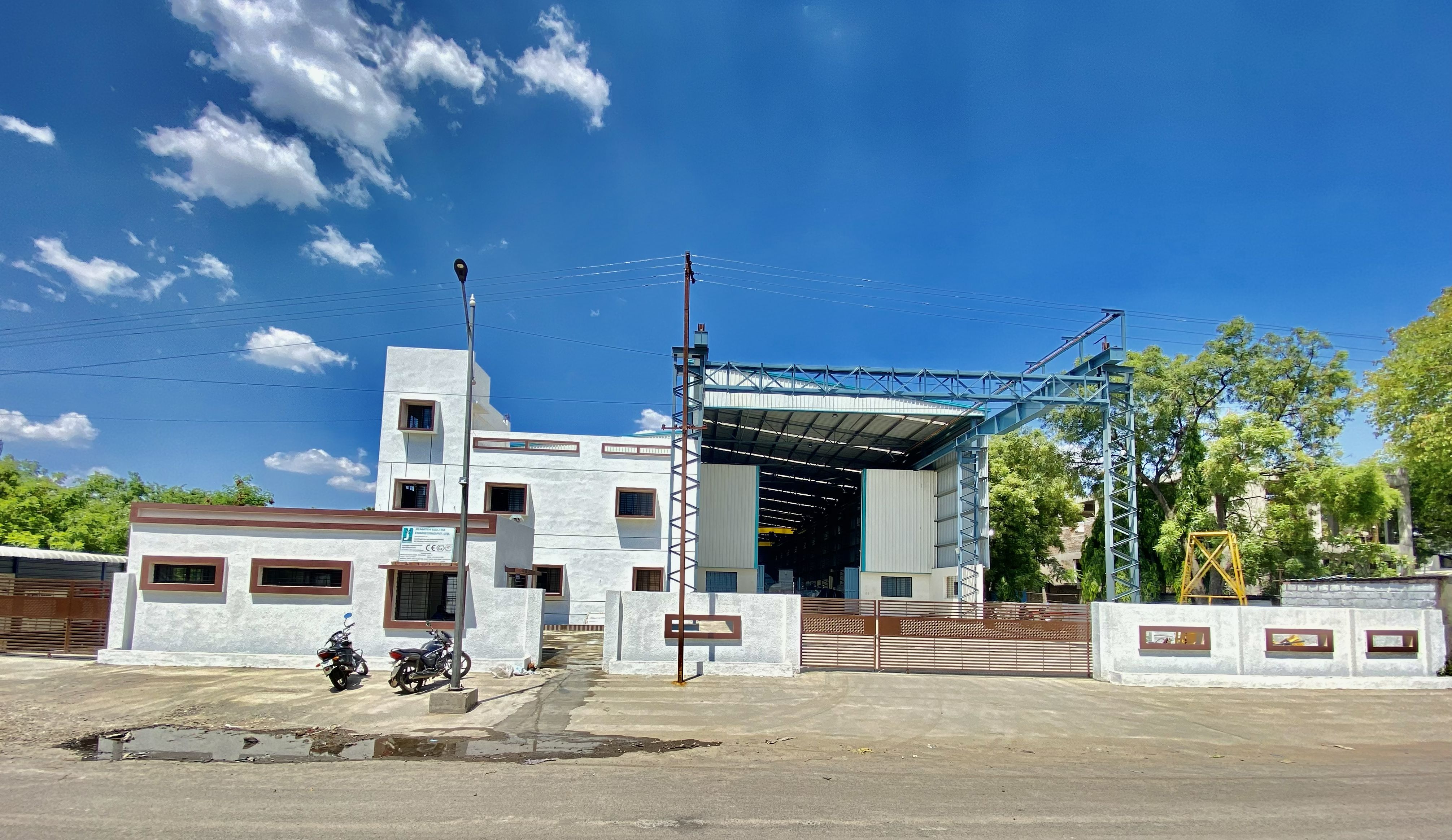
Large double-inlet ventilation fan for a tunnel and metro project on the Jitamitra shop floor
Home  /  Industries  /  Tunnel & Metro Infrastructure
Industries

Fans for tunnels, metros and underground infrastructure.

A tunnel or metro breathes through its fans: supply and jet fans push clean air along the bore, exhaust fans clear vehicle congestion, and the emergency smoke fans have to keep pulling when a fire fills the tunnel with hot smoke. Stations and connected car parks add their own exhaust. Most of the year the duty is clean high-volume air — but the fan is judged on the day it must move 250–400 °C smoke for the rated emergency period and not stall. We engineer to that duty across our range: large-flow ventilation and a rated high-temperature emergency capability, across the envelope below — up to 2,00,000 CMH, 2,000 mmWC, 400 HP and 600 °C. No executed tunnel reference yet — tell us your duty and we engineer to it.

2,00,000 CMHlarge ventilation flow
250–400 °Crated smoke duty
reversiblesupply / exhaust airflow
600 °Cenvelope ceiling
15,000+
fans built since 2011
200 HP
VFD test rig · IS 4894 / AMCA 210
99%
on-time delivery
3
working days to quote — always
JET & SUPPLY · CONGESTION EXHAUST · EMERGENCY SMOKE · STATION & CAR-PARK
Where the fans sit

One tunnel, three ventilation jobs — and one of them is a fire.

A tunnel or metro ventilation system runs three distinct jobs on the same air. Day to day it moves large volumes of clean air to control congestion and pollutant build-up. In an incident it reverses into an emergency mode, driving smoke away from the escape route while people evacuate. And the connected spaces — stations, concourses and basement car parks — need their own extract. The clean-air duty is high flow at modest static; the emergency duty is the one that sets the fan's construction.

The duties we run underground

The ventilation duties across a tunnel or metro — and the role each one plays.

An underground scheme needs a family of ventilation duties, from the everyday clean-air movement of the bore to the rated smoke extraction that has to work in a fire. The underlying fan engineering — large impellers, reversible airflow, high-temperature construction — is proven across our range; we engineer each of these duties to its own flow, static and emergency rating, not adapted from a catalogue near-fit.

The fans we deploy here

Three fan types cover underground ventilation — matched to the flow and the emergency rating.

The wheel is chosen by the flow it moves and the pressure it makes: flat-plate backward wheels for rugged high-volume extract, a backward-curved plate wheel for efficient supply and jet duty, and an aerofoil wheel where clean-air efficiency and low noise matter most. All three build the reversible airflow and high-temperature construction the emergency duty demands, across the same envelope — to 2,00,000 CMH, 2,000 mmWC, 400 HP and 600 °C.

Why underground fan duty is hard

Three things in a tunnel decide whether the fan is safe on the worst day of its life.

A tunnel fan spends its life on clean air but is designed for the fire. Three things set it apart from ordinary ventilation — a rated high-temperature emergency duty it must survive on demand, airflow that has to reverse and restart hot, and noise and energy limits that run for decades on the everyday duty. Engineer for all three and the fan performs on the incident it was built for. Engineer for the clean-air point alone and it stalls, seizes or breaks noise limits when it matters most.

01 — HOT SMOKE

Rated high-temperature emergency duty

On a fire the fan must move smoke at 250–400 °C for the rated emergency period — 60–120 min typical — while the same air softens mild steel to ~40% of its cold yield and a 1 m shaft grows several millimetres. A wheel sized only for cold air distorts and stalls exactly when it must hold flow.

How we engineer it out

High-temperature-rated construction to the smoke class — a heat-rated wheel, drive and bearings that hold the 250–400 °C smoke duty for the rated period; the aerodynamic duty is proven on the 200 HP VFD rig (rated and tested-to-method, not third-party certified).

02 — REVERSAL

Reversible airflow, restarting hot

The smoke strategy flips the airflow direction — the fan that supplies clean air must extract smoke the other way, and often restart against a hot, moving column of air already in the tunnel. A wheel and drive not designed for reversal and hot restart cannot make its rated flow in the direction the incident demands.

How we engineer it out

A reversible impeller and bidirectional drive sized to restart against a hot, moving column — a wheel form that holds a usable curve in both directions, with the motor and VFD selected for the restart torque and the thermal case.

03 — NOISE & ENERGY

Decades of quiet, efficient running

The emergency runs for minutes; the ventilation runs for decades. Undergrounds sit under cities with strict noise limits, and a large fan even slightly off its best efficiency burns that gap in power every hour for the life of the tunnel. A fan tuned only to survive the fire wastes energy and breaks sound limits the rest of the time.

How we engineer it out

A high-efficiency backward-curved or aerofoil wheel sized onto its best-efficiency point for the everyday duty, with inlet and outlet silencers and acoustic-treated casing to the site noise limit, and VFD speed control so the fan tracks demand instead of throttling.

How we design for the tunnel

Every temperature, reversal and noise choice is documented on the GA drawing you sign off — before we cut metal.

We don't sell a catalogue near-fit onto an underground scheme. Each fan is engineered to its own duty — the jet fan to its thrust, the supply fan to its clean-air efficiency, the smoke fan to its rated temperature and period — at your operating point and your emergency case.

  • Rated high-temperature construction — A wheel and shaft sized for stress at temperature, not just cold; casing metallurgy stepped up by temperature band (IS 2062 / 16Mo3); heat shield behind the wheel and a shaft cooling disc above ~350 °C with bearings kept outside the airstream — engineered to hold rated flow at 250–400 °C for the specified emergency period, up to the 600 °C envelope ceiling.
  • Reversible airflow & hot restart — Impeller and drive engineered so the fan makes its rated flow in both directions and can restart against a hot moving air column; drive by VFD or direct as the strategy needs, with the reversal case proven on the 200 HP test rig before dispatch.
  • Noise & efficiency for the everyday duty — Aerofoil or backward-curved wheel selected so the everyday operating point sits in the best-efficiency region — the margin that a survival-only design wastes every hour — with inlet/outlet silencer scope and blade geometry chosen to hold the site sound limit for decades.
  • Engineered to your emergency case — The underlying engineering is proven across our range — large impellers, high-temperature construction, reversible airflow. We have no executed tunnel reference to overstate; instead we engineer each fan to your stated flow, static, rated temperature and emergency period, documented on the GA drawing you approve before we cut metal.
Standards & conformity

Stated precisely — because procurement checks.

What our marks mean, in the words that survive an audit.

Performance

Tested to the AMCA 210 / ISO 5801 method, in-house on our 200 HP VFD rig. Tested-to-method — not AMCA-certified.

Quality system

ISO 9001:2015 — third-party certified. Our only third-party certification.

CE conformity

Self-declared per 2006/42/EC + 2014/35/EU (Module A). A self-declaration, not a notified-body certificate.

ATEX conformity

Self-declared, Zone 2/22, Category 3, per 2014/34/EU, where the area classification calls for it.

Oil & gas duty

Designed and built to API 673 as project-specific scope.

Welding

ASME Sec IX qualified welders + WPS for every joint.

Balance

ISO 21940 — G6.3 minimum, G2.5 / G1.0 on application.

Vibration

ISO 20816 evaluation; ISO 14694 for fan-specific limits.

Questions engineers ask

Tunnel & metro ventilation fan questions, answered straight.

Have you executed tunnel or metro ventilation projects before?
Not yet — this is an engineered-capability page, and we will not claim a tunnel reference we do not have. What is proven is the underlying fan engineering across our range: large-diameter impellers, high-volume ventilation duty, high-temperature construction to 600 °C, and reversible airflow. We engineer each tunnel or metro fan to your stated flow, static pressure, rated smoke temperature and emergency period, and we prove the design on our test rig before dispatch. Tell us your duty and your emergency case and we engineer to it.
What smoke temperature and duration can the emergency fans handle?
We build to the rated emergency duty you specify. Tunnel smoke fans are typically rated for 250 to 400 °C over a 60 to 120 minute emergency period, and our envelope ceiling is 600 °C continuous, so the rated smoke duty sits inside what we engineer. Above about 350 °C we fit a shaft cooling disc to keep heat off the bearings, keep the bearings outside the airstream, and add expansion joints for the thermal growth. The wheel and shaft are sized for stress at temperature, not just cold, so the fan holds its rated flow through the emergency instead of distorting or stalling. We build to your stated temperature-time rating, not a generic figure.
Can the fan run supply one way and extract smoke the other?
Yes. Reversible airflow is a design case we engineer to, because most tunnel smoke strategies flip the ventilation direction on a fire — the fan that supplies clean air must extract smoke the other way, and often restart against a hot moving air column already in the bore. We engineer the impeller and drive so the fan makes its rated flow in both directions and can restart hot, and we prove the reversal case on the test rig before dispatch, not on the day of the incident.
How do you keep a large tunnel fan quiet and efficient for the everyday duty?
The emergency runs for minutes; the ventilation runs for decades, so we size the everyday operating point onto the best-efficiency region of the selected wheel — an aerofoil or backward-curved plate wheel for clean high-volume air — rather than tuning only to survive the fire. A fan running 5 percent off its best efficiency burns that gap in power every hour for the life of the tunnel, so best-efficiency selection is the energy story. We add inlet and outlet silencer scope and choose blade geometry to hold your site sound limit, and specify the whole scope on the GA drawing you sign off.
Can you build a replacement to match our existing tunnel or car-park fan?
Yes. We reverse-engineer to the existing duty point (flow, static pressure, rated smoke temperature and emergency period), bearing centres, inlet/outlet orientation and foundation bolt pattern so the unit drops onto the existing base and ducting — whether it is a jet fan, a shaft supply or exhaust fan, a car-park extract fan or an emergency smoke fan. Made to your installation and your emergency rating, not a nearest-catalogue substitute. Send the old GA, the nameplate and the emergency rating and we match it.
Do you performance-test the fans, and what about AMCA, CE, ATEX and quality certification?
Every fan is performance-tested in-house to the AMCA 210 / ISO 5801 method on our 200 HP VFD test rig, and dynamically balanced to ISO 21940 G6.3 as standard (G2.5 / G1.0 on application). To be precise: that in-house testing is to the AMCA 210 / ISO 5801 method, not AMCA-certified, and we are not an AMCA member; CE is self-declared per 2006/42/EC and 2014/35/EU, and ATEX Zone 2/22 is self-declared per 2014/34/EU (Category 3) where the area classification calls for it — those are self-declarations of conformity, not third-party certifications. Our only third-party certification is ISO 9001:2015.

Across the range

Where Tunnel & Metro Infrastructure fits — the fans we deploy, the duties we run, and adjacent industries.

The same engineering, viewed three ways — by fan family, by duty, and by industry. Follow the cross-references.

Take it further

Specs an engineer can use — not a brochure.

Engineer to engineer

Send us the duty point.
We'll quote in 3 working days — always.

No model numbers needed. Give us the operating conditions — flow, static, gas temperature, composition, particulate, and any tender standard — and our application engineers size the fan and quote it. Attach a spec or GA if you have one.

+91 90110 09155  ·  mihir.jitamitra@gmail.com