You list zero battery / EV references. Why should we trust you on this duty?
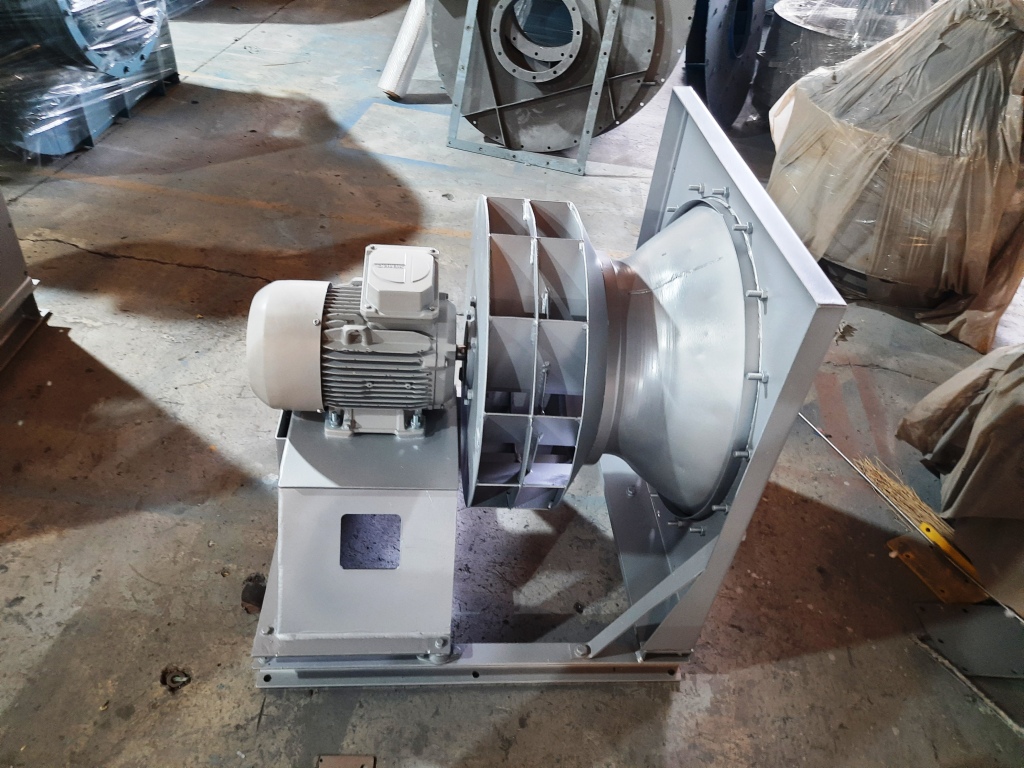
Because the engineering is proven even where the named reference is not yet. We are candid about it: we have not yet executed a battery or EV plant as a named customer reference, so this is an engineered-capability page. But every element the duty needs is proven across our range in adjacent industries. The ultra-dry, low-sound supply fan is the same clean-air aerofoil and backward-curved engineering we build for cleanroom and pharma AHUs; the flammable-solvent exhaust is the same spark-resistant ATEX construction we build for paint-booth and chemical exhaust; and the combustible-dust exhaust is the same dust-extraction and pollution-control fan we build every week. We size it on our proprietary selection software to your duty and prove it on the test rig before it ships.
Can you supply the fans across both the clean side and the dirty side of a cell line?
Yes, from one partner on one engineering convention. On the clean side, dry-room and cleanroom AHU supply and return. On the dirty side, solvent and NMP vapour exhaust off the coating and drying line, combustible electrode-dust extraction from mixing and calendering, corrosive formation and electrolyte fume, and local exhaust ventilation at the hoods. Each fan is engineered to its own air — the ultra-dry supply fan and the ATEX solvent-exhaust fan are different machines — but they come from one source, so the fans, seals and drives carry one convention across the plant.
Our coating line gives off NMP and solvent vapour. How do you make the exhaust fan safe?
We build it spark-resistant and self-declare it to the zone. NMP and solvent vapour is a flammable atmosphere, typically ATEX Zone 2 in the exhaust duct, so the fan is built to a spark-resistant construction per AMCA 99: non-sparking rubbing-contact materials, generous wheel-to-casing clearance so the wheel cannot strike the housing, a bonded and earthed rotor to bleed static, and bearings kept outside the gas path. Where the area classification calls for it, that is self-declared to ATEX Zone 2, Category 3 per 2014/34/EU. To be precise, ATEX conformity is our self-declaration, not a third-party certification.
Electrode and metal dust is combustible. How do you handle the dust-extraction fan?
As a combustible-dust duty, typically ATEX Zone 22, engineered so the fan is neither the ignition source nor the fuel trap. The wheel geometry sheds dust rather than letting it cake and unbalance the rotor; the rotor and casing are bonded and earthed to prevent static build-up; internal transitions are smooth with no ledges that trap and accumulate dust; and the construction is spark-resistant and self-declared to ATEX Zone 22, Category 3. We coordinate the fan with the dust collector's explosion-protection scope — venting or suppression is the collector builder's package, and we document the fan interface to it.
How dry and how quiet can the dry-room supply fan run?
Dry-room air is commonly held below −40 °C dew point and the room is sound- and vibration-critical, so we engineer for both. We select a high-efficiency aerofoil or backward-curved wheel and size it to run at its best-efficiency point, where it is both quietest and most stable. Bearings are sealed and kept out of the clean airstream with a shaft seal against oil and moisture migration; the casing is a smooth wash-down build that does not shed particles into the supply; and the rotor is balanced to ISO 21940 G2.5, or G1.0 on application, so vibration never carries into the room. The desiccant dehumidification that sets the dew point is the AHU builder's scope; we deliver the air-moving stage to fit it.
Do you performance-test the fans, and what about AMCA, CE, ATEX and quality certification?
Every fan is performance-tested in-house to the AMCA 210 / ISO 5801 method on our 200 HP VFD test rig, and dynamically balanced to ISO 21940 G6.3 as standard, with G2.5 or G1.0 on application for the sound-critical dry-room duty. To be precise: that in-house testing is to the AMCA 210 / ISO 5801 method, not AMCA-certified, and we are not an AMCA member; CE is self-declared per 2006/42/EC and 2014/35/EU, and ATEX Zone 2/22 is self-declared per 2014/34/EU (Category 3) where the area classification calls for it — those are self-declarations of conformity, not third-party certifications. Our only third-party certification is ISO 9001:2015.