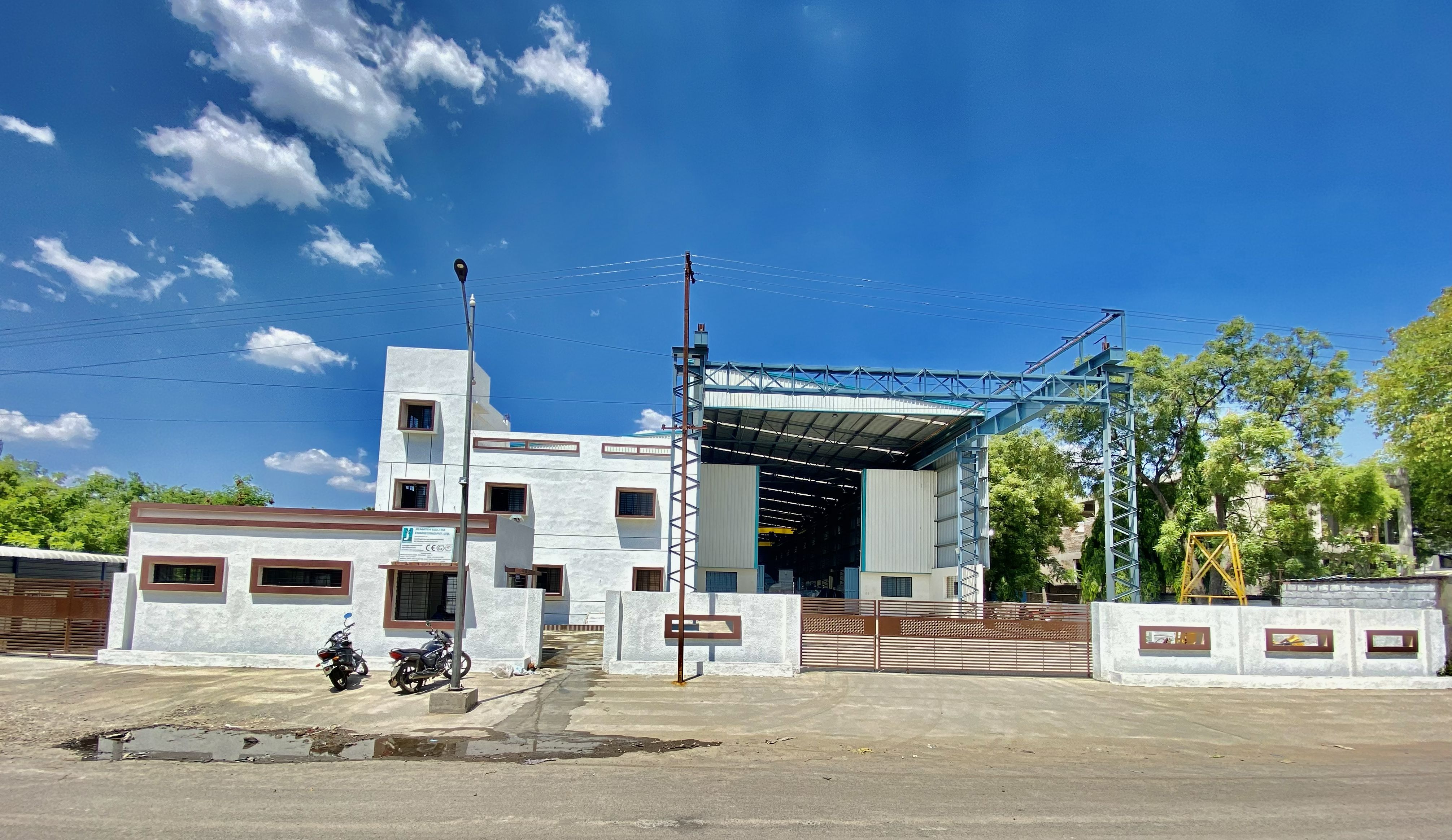
Corrosion-resistant centrifugal fan for a desalination plant on the Jitamitra shop floor
Home  /  Industries  /  Desalination
Industries

Fans for the desalination plant — where salt, not heat, decides the life.

A desalination plant is a corrosion problem before it is an airflow problem. Thermal (MSF/MED) and RO trains push warm, saturated, chloride-laden vapour and brine mist through their ventilation and exhaust, and the coastal air outside is salt-laden all day. The gas is rarely hot or dirty — but every wetted surface sees chloride salt-spray that pits ordinary steel in months. We engineer fans for that duty, not off a shelf: corrosive brine and vapour exhaust, evaporator and process ventilation, cooling-tower, seal air and local exhaust — across the full envelope below, up to 2,00,000 CMH, 2,000 mmWC, 400 HP and 600 °C. The fan engineering is proven across our range; tell us your desalination duty and we build to it.

Cl⁻chloride salt-spray duty
316L / duplexcorrosion metallurgy
~40–60 °Cwarm saturated vapour
2,00,000 CMHmax flow, engineered
15,000+
fans built since 2011
200 HP
VFD test rig · IS 4894 / AMCA 210
99%
on-time delivery
3
working days to quote — always
BRINE & VAPOUR EXHAUST · EVAPORATOR VENT · COOLING TOWER · SEAL AIR · LEV
Where the fans sit

One plant, three jobs the fans do — and every one of them lives in salt.

Across a desalination plant the fans do three distinct jobs: they exhaust the corrosive brine and vapour from the evaporator and process side, they ventilate and cool the machinery and process halls, and they move the seal, cooling and cooling-tower air the trains depend on. None of it is especially hot or dust-laden — the duty that decides fan life is the chloride salt-spray that saturates every wetted surface. Get the metallurgy and the drainage right and the fan lasts; miss them and it pits and seizes.

The duties we run on a desalination plant

The fan duties across a desalination plant — and the role each one plays.

A desalination train needs a family of fan duties, from the corrosive brine-vapour exhaust to the clean-side seal and cooling air. We engineer each to its own gas, temperature, humidity and corrosion load — the underlying fan engineering is proven across our range on corrosive and clean-air duty, and we build it to your desalination requirement rather than adapt a catalogue near-fit.

The fans we deploy here

Three fan types cover the desalination plant — matched to the pressure and the corrosion.

The wheel is chosen by the pressure the duty makes and the corrosion it lives in, not by dust load: a backward-curved plate wheel for the corrosive brine-vapour exhaust and higher-pressure duty, an aerofoil for the clean, efficient hall and cooling-air ventilation, and a rugged radial where a mist-laden or higher-static duty needs a robust wheel. All three build across the same envelope and in corrosion metallurgy — up to 2,00,000 CMH, 2,000 mmWC, 400 HP and 600 °C.

Why desalination fan duty is hard

Three things in a desalination plant decide whether the fan lasts years or seizes in months.

Desalination attacks a fan differently from a furnace: it is not the heat or the dust, it is the chloride. Warm, saturated, salt-laden vapour condenses on every wetted surface, the surrounding air is itself corrosive, and containment matters because a leaking brine-vapour fan corrodes the room around it. Engineer the metallurgy, the drainage and the containment to the gas and the fan runs 10+ years in a coastal plant. Specify a generic mild-steel fan and chloride pitting can perforate it in 6–18 months.

01 — CORROSION

Chloride salt-spray & pitting

Warm, saturated brine vapour and coastal salt air lay chloride on every wetted surface. Chlorides drive pitting and crevice corrosion that ordinary steel — even 304 stainless — cannot resist, perforating the casing and eating the wheel from the weld seams out.

How we engineer it out

Metallurgy sized to the chloride level — 316L as the baseline wetted material, stepping to duplex (2205) or super-duplex where chlorides are high; continuous, crevice-free welds; and, for the coating route, an FRP or heavy epoxy/rubber-lined build where the gas allows.

02 — CONTAINMENT

Brine-vapour leakage & condensate

A brine-vapour exhaust that leaks or fails to drain sprays salt water into the fan bearings and the room — condensate pools in the casing, corrodes from the inside, and carries chloride to everything downstream of a shaft seal that was never designed for it.

How we engineer it out

A shaft seal rated for the wet, corrosive service; a drained, self-emptying casing with the outlet and drain placed so no brine pools; bearings kept outside the airstream; and a leak-tight, gasketed casing so the corrosive vapour stays inside the fan, not in the hall.

03 — HUMIDITY

Saturated humidity & mist carryover

The gas runs warm — around 40–60 °C — but at or near 100% relative humidity, so it condenses inside the fan even on the clean side, and brine-mist carryover coats the wheel and unbalances it as salt builds up.

How we engineer it out

Wetted surfaces and drainage designed for continuous condensation; blade geometry chosen so salt does not key onto the wheel; drain points at every low spot; and, on mist-laden duty, an easily cleaned wheel and access doors so deposits wash off in place.

How we design for the plant

Every metallurgy, seal and drainage choice is documented on the GA drawing you sign off — before we cut metal.

We don't sell a catalogue near-fit onto a desalination plant. Each fan is engineered to its own duty and its own chloride level — the brine-vapour exhaust to its corrosion, the hall ventilation to its efficiency, the seal-air fan to its reliability — at your operating point.

  • Corrosion metallurgy to the chloride level — Wetted-surface material sized to your gas — 316L as the baseline, stepping to duplex (2205) or super-duplex where chlorides are high, or an FRP / epoxy / rubber-lined build where the gas allows; continuous crevice-free welds so pitting has nowhere to start.
  • Containment & drainage — A shaft seal rated for the wet, corrosive service; a drained, self-emptying casing with drains at every low spot so no brine pools; bearings kept outside the airstream; and a leak-tight, gasketed casing so the corrosive brine vapour stays inside the fan.
  • Built for continuous humid service — Wetted surfaces and geometry designed for gas at or near 100% relative humidity around 40–60 °C; blade geometry chosen so salt does not key onto the wheel; access doors and an easily cleaned rotor so mist deposits wash off in place — not welded shut.
  • Single source across the plant — One engineering partner for the whole plant — brine-vapour exhaust, hall and local ventilation, cooling-tower and seal air — so the fans, seals, coatings and drives carry one convention across the site. We engineer to your desalination duty and prove it on our 200 HP VFD test rig before dispatch.
Standards & conformity

Stated precisely — because procurement checks.

What our marks mean, in the words that survive an audit.

Performance

Tested to the AMCA 210 / ISO 5801 method, in-house on our 200 HP VFD rig. Tested-to-method — not AMCA-certified.

Quality system

ISO 9001:2015 — third-party certified. Our only third-party certification.

CE conformity

Self-declared per 2006/42/EC + 2014/35/EU (Module A). A self-declaration, not a notified-body certificate.

ATEX conformity

Self-declared, Zone 2/22, Category 3, per 2014/34/EU, where the area classification calls for it.

Oil & gas duty

Designed and built to API 673 as project-specific scope.

Welding

ASME Sec IX qualified welders + WPS for every joint.

Balance

ISO 21940 — G6.3 minimum, G2.5 / G1.0 on application.

Vibration

ISO 20816 evaluation; ISO 14694 for fan-specific limits.

Questions engineers ask

Desalination fan questions, answered straight.

Have you built fans specifically for desalination plants?
We engineer to the desalination duty rather than claim a track record we do not have here. The underlying fan engineering — corrosive-gas exhaust, humid ventilation, cooling and seal air — is proven across our range in chemicals, marine and water & wastewater plants that see the same chloride and corrosion problem. Tell us your desalination duty (the gas, the chloride level, the humidity, the flow and pressure) and we build the fan to it, engineered to your operating point, not adapted from a catalogue near-fit.
Chloride salt-spray is the real enemy here. What metallurgy do you use?
We size the metallurgy to your chloride level, because chlorides drive pitting and crevice corrosion that ordinary steel and even 304 stainless cannot resist. Our baseline wetted material is 316L; where chlorides are high we step to duplex (2205) or super-duplex, and where the gas allows we offer an FRP or heavy epoxy / rubber-lined build. Welds are continuous and crevice-free so pitting has nowhere to start. The right answer depends on your chloride concentration, temperature and whether the surface stays wet, so we engineer it to your gas, not a default.
The brine-vapour exhaust gas is warm and saturated, not hot. How does that change the fan?
It changes it a lot. Desalination exhaust is typically warm — around 40 to 60 °C — but at or near 100% relative humidity, so it condenses inside the fan even on the clean side. We design the wetted surfaces and drainage for continuous condensation, place drains at every low spot so no brine pools, choose blade geometry so salt does not build up on the wheel, and keep the bearings outside the airstream. Heat is not the problem here; wet chloride is, and the fan is built for that.
How do you stop the brine vapour leaking into the bearings and the hall?
Containment is part of the design. We fit a shaft seal rated for the wet, corrosive service, keep the bearings outside the airstream, and build a leak-tight, gasketed casing so the corrosive vapour stays inside the fan and not in the room. The casing is drained and self-emptying, with the outlet and drain placed so condensate cannot pool and corrode from the inside. A brine-vapour fan that leaks corrodes the room around it, so we design it not to.
Can you build a replacement to match our existing desalination fan's duty and footprint?
Yes. We reverse-engineer to the existing duty point (flow, static pressure, gas temperature, humidity and chloride load), bearing centres, inlet/outlet orientation and foundation bolt pattern so the unit drops onto the existing base and ducting — whether it is a brine-vapour exhaust, a ventilation fan, a cooling-tower fan or a seal-air fan. Made to your installation, not a nearest-catalogue substitute. Send the old GA, the nameplate and a curve if you have one, and we match it.
Do you performance-test the fans, and what about AMCA, CE, ATEX and quality certification?
Every fan is performance-tested in-house to the AMCA 210 / ISO 5801 method on our 200 HP VFD test rig, and dynamically balanced to ISO 21940 G6.3 as standard (G2.5 / G1.0 on application). To be precise: that in-house testing is to the AMCA 210 / ISO 5801 method, not AMCA-certified; CE is self-declared per 2006/42/EC and 2014/35/EU, and ATEX Zone 2/22 is self-declared per 2014/34/EU (Category 3) where the area classification calls for it — those are self-declarations of conformity, not third-party certifications. Our only third-party certification is ISO 9001:2015.

Across the range

Where Desalination fits — the fans we deploy, the duties we run, and adjacent industries.

The same engineering, viewed three ways — by fan family, by duty, and by industry. Follow the cross-references.

Take it further

Specs an engineer can use — not a brochure.

Engineer to engineer

Send us the duty point.
We'll quote in 3 working days — always.

No model numbers needed. Give us the operating conditions — flow, static, gas temperature, composition, particulate, and any tender standard — and our application engineers size the fan and quote it. Attach a spec or GA if you have one.

+91 90110 09155  ·  mihir.jitamitra@gmail.com