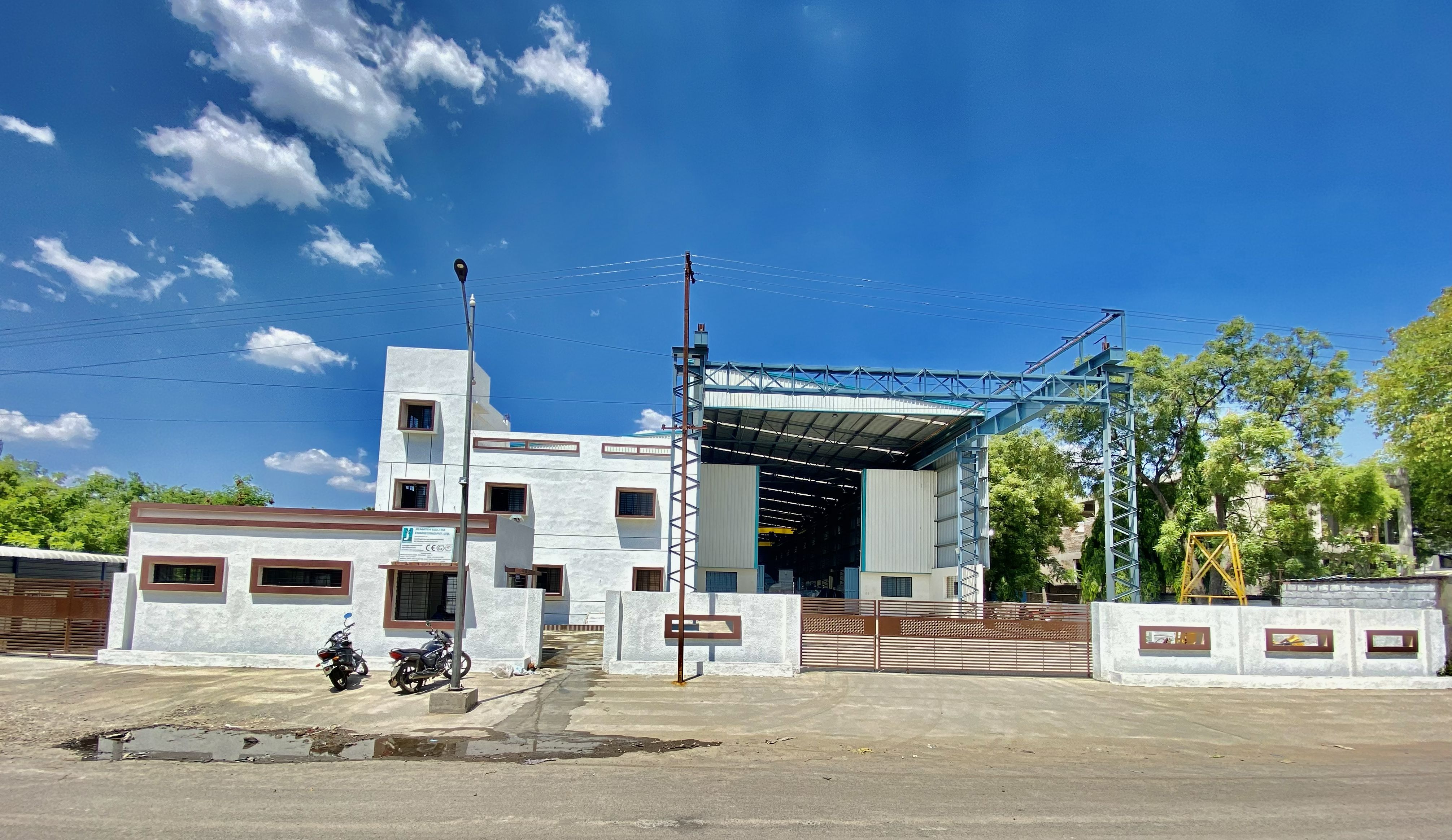
Corrosion-resistant marine ventilation centrifugal fan on the Jitamitra shop floor
Home  /  Applications  /  Engine-room / cargo-hold vent
Applications

Engine-room and cargo-hold vent fans — built for salt air, motion and confined-space safety.

Marine and offshore ventilation is a survival duty. An engine-room supply fan feeds combustion and cooling air to running machinery; an exhaust fan clears heat, oil mist and fumes from the space; a cargo-hold fan purges vapour and gas from a closed compartment before entry. The air is salt-laden and humid, the fan lives with vibration and roll, and on tankers and gas holds the atmosphere can be flammable. We engineer these fans to marine-grade corrosion protection, with spark-resistant and gas-safe construction where the space calls for it, across the envelope below — up to 2,00,000 CMH, 2,000 mmWC and 400 HP.

2,00,000CMH max flow
2,000mmWC max static
Zone 2ATEX self-declared
400 HPdrive power
15,000+
fans built since 2011
200 HP
VFD test rig · IS 4894 / AMCA 210
99%
on-time delivery
3
working days to quote — always
SALT-LADEN HUMID AIR · SUPPLY OR EXHAUST · CONFINED-SPACE SAFETY · SHIPBOARD VIBRATION
What it does

Supply, exhaust or purge — three marine ventilation jobs, one demanding environment.

A marine ventilation fan keeps a machinery space or cargo hold safe and workable at sea: forcing fresh air into an engine room, drawing heat and fumes out of it, or purging vapour from a closed hold before crew enter. The duty is rarely hot or dusty — but salt, humidity, motion and, on tankers, a flammable atmosphere make it unforgiving in a different way.

  • 01
    Supply

    Fresh air into the engine room and machinery spaces for diesel combustion and equipment cooling — sized so the running engines and generators never starve of air, typically holding the space at a slight positive pressure of +2 to +5 mmWC.

  • 02
    Exhaust

    Heat, oil mist and machinery fumes out of the space. Engine rooms run hot and humid; the exhaust fan holds the required air-change rate — often 20–40 changes/hour — and clears the thermal load so the space stays within the crew's working limit.

  • 03
    Purge

    Cargo holds, cofferdams, pump rooms and enclosed compartments cleared of accumulated vapour and gas before entry — gas-safe construction so the purge fan itself is not the ignition source in a space that may still be flammable.

INDUCED-DRAFT CENTRIFUGAL FAN Single-width single-inlet — scroll cut away to reveal the impeller inlet expansion joint MOTOR IE3 / VFD GAS IN GAS OUT n 1 2 3 4 5 6 7 8 9 10 1 Inlet cone (bell-mouth) 2 Backward-curved / radial-tipped impeller 3 Spiral volute casing 4 Replaceable AR wear plates (volute throat) 5 Shaft 6 Plummer-block bearings (L10 ≥ 40,000 h) 7 Shaft cooling disc (>400 °C duty) 8 Pedestal / base frame 9 Drive — motor + coupling 10 Outlet flange + duct take-off
Fig. 1Marine ventilation centrifugal fan — single-width single-inlet, scroll cut away to reveal the backward-curved impeller and non-sparking rub ring. Numbered components keyed below the drawing.
Why it is hard

Salt, motion and flammable atmospheres decide whether the fan survives the voyage.

Marine ventilation looks like clean-air HVAC and is priced by many as if it were. It is not. Chloride-laden humid air corrodes a mild-steel fan from the inside out; shipboard vibration and vessel motion fatigue a rotor sized only for a static foundation; and in cargo holds, pump rooms and cofferdams the atmosphere can be flammable. Build for the sea, and the fan lasts the docking interval and beyond. Build it as a shore HVAC unit, and salt takes the casing and the atmosphere takes the risk.

01 — CORROSION

Salt-laden humid air attacks the fan

Marine air carries chlorides and runs near saturation. A mild-steel casing and wheel corrode from both faces; pitting under blade deposits throws the rotor out of balance and eats the weld seams long before any performance limit is reached.

How we engineer it out

Marine-grade corrosion protection matched to the exposure — hot-dip galvanised or heavy epoxy on protected supply air, 304 / 316L stainless or FRP construction on exhaust and salt-spray-exposed duty, sealed fasteners and drained casings so water never stands inside the fan.

02 — IGNITION

Flammable atmospheres in holds and pump rooms

Cargo holds on tankers and gas carriers, pump rooms and cofferdams can hold a flammable vapour or gas atmosphere. A ferrous impeller rubbing a ferrous casing, or a static discharge, is a credible ignition source in exactly the space the fan is there to make safe.

How we engineer it out

Spark-resistant construction per AMCA 99 — Type A (all non-ferrous flow path), Type B (non-ferrous rub ring) or Type C (aligned construction) — with bonded earthing throughout, and ATEX Zone 2/22 self-declared (Category 3) per 2014/34/EU where the space is classified as hazardous.

03 — VIBRATION

Shipboard vibration and vessel motion

A fan bolted to a ship's structure sees hull vibration, propeller excitation and continuous roll and pitch — loads a shore-mounted fan never feels. A rotor and bearing set sized for a static base fatigues the shaft, loosens fasteners and fails the bearings early at sea.

How we engineer it out

Rotor dynamically balanced to a tighter grade — ISO 21940 G2.5 rather than the G6.3 shore standard — with shaft and bearing set sized for the marine vibration case, anti-vibration mounts, and locked, marine-rated fasteners throughout. Bearing life is a design target of L10h ≥ 40,000 h continuous.

How we design for it

Every choice is documented on the GA drawing you sign off — before we cut metal.

We don't sell a catalogue near-fit. The fan is engineered to your space, air exposure, area classification, sound limit and the class society your vessel is built to — made to order, not off a shelf.

  • Materials & corrosion protection — Matched to the exposure: hot-dip galvanised or heavy-duty epoxy on protected supply air; 304 / 316L stainless where salt spray and condensate are constant; FRP or FRP-lined construction for corrosive cargo-vapour exhaust; sealed fasteners and drained casings throughout so water is never trapped.
  • Spark-resistant & gas-safe build — AMCA 99 Type A / B / C selected to the space — Type B (non-ferrous rub ring) as the working default, Type A (fully non-ferrous flow path) for tanker holds and pump rooms — with bonded earthing and ATEX Zone 2 self-declaration where the compartment is classified.
  • Impeller geometry — Backward-curved or backward-inclined wheels for efficient, quiet clean-air supply and exhaust; backward-flat-plate on higher-pressure purge and duct-run duty. Efficiency matters — ventilation fans run continuously on generator-limited power at sea.
  • Marine vibration & mounting — Rotor balanced to ISO 21940 G2.5, shaft and bearings sized for the shipboard vibration case, anti-vibration isolators and flexible connections to break structure-borne noise, and marine-rated locked fasteners so nothing works loose under continuous motion.
Engineered to your duty point

We size the fan onto the stable side of its curve — then prove it on the rig.

No catalogue fan forced onto your spec. Your operating point is engineered onto the falling, stable portion of the selected wheel — 5–15% right of the peak — so air-change and capture rates hold across duct and damper positions, then verified on the 200 HP VFD test rig before dispatch.

avoid: unstable 0 40,000 80,000 1,20,000 1,60,000 2,00,000 VOLUME FLOW RATE  [ CMH ] 0 500 1000 1500 2000 STATIC PRESSURE  [ mmWC ] 0 25 50 75 100 STATIC EFFICIENCY  [ % ] Fan static pressure System resistance Static efficiency BEP 82% DUTY POINT 1,20,000 CMH · 450 mmWC Fan static pressure System resistance Static efficiency
Fig. 2Representative marine-ventilation characteristic — fan static pressure, system resistance and static efficiency vs. flow, with the duty point engineered onto the falling, stable region right of the peak. Illustrative; every fan is sized to its own duty.
Capability envelope — marine ventilation service

What we can supply, and where it stretches on application.

ParameterStandardOn application
Volume flowup to 2,00,000 CMHhigher on enquiry
Static pressureup to 1,000 mmWC typicalup to 2,000 mmWC for long trunk and high-resistance duty
Air temperatureambient to 80 °C (engine-room exhaust)higher on hot-space application with special metallurgy
Corrosion protectionhot-dip galvanised / heavy epoxy304 / 316L SS or FRP for salt-spray and cargo-vapour exposure
Construction (ignition)AMCA 99 spark-resistant Type BType A / C + ATEX Zone 2/22 (Cat 3) self-declared
Sound level<85 dB(A) @ 1 m<75 dB(A) with silencers + acoustic enclosure
Drive powerup to 400 HPhigher with custom motor sourcing
Balance qualityISO 21940 G2.5 (marine)G1.0 on application

The envelope above covers the great majority of marine and offshore ventilation duty. Static pressure runs up to 1,000 mmWC on typical supply and exhaust trunking and up to 2,000 mmWC on long or high-resistance runs. Marine air is clean of dust, so wear protection is rarely required; the design load is corrosion, ignition safety and vibration instead. Spark-resistant construction is per AMCA 99 (Type A/B/C), combined on classified spaces with ATEX Zone 2/22 (Cat 3) self-declared per 2014/34/EU. Marine balance is a tighter ISO 21940 G2.5 as standard for the shipboard vibration case. Bearing life is a design target of L10h ≥ 40,000 h continuous, longer on application. Class-society witness and documentation are arranged project-specific with the vessel's society. For duty beyond the envelope we engineer to spec and quote on enquiry.

How a Jitamitra ERCH fan is specified

Specified, not picked from a shelf.

The same engineering language carries from your enquiry to the GA drawing to the nameplate — expressed in the standard AMCA conventions, with the spark-resistant and ATEX marking alongside.

Specification fieldOptions
Arrangement (AMCA 99)Arr. 1 (overhung, fan bearings) / Arr. 4 (direct, motor on base) / Arr. 8 (overhung on common base) / Arr. 9 (overhung, motor side) / Arr. 10 (overhung, motor inside base) — selected by drive, space access and mounting envelope aboard.
Width / inletSWSI (single width, single inlet) default for marine supply and exhaust; DWDI (double width, double inlet) for high air-change flow at moderate pressure in large engine rooms.
Wheel typeBackward-curved or backward-inclined (default, efficient and quiet clean-air duty) / backward-flat-plate (higher-pressure purge and long trunk runs).
Spark-resistant construction (AMCA 99)Type A (all non-ferrous parts in the airstream) / Type B (non-ferrous rub ring and non-ferrous parts across the shaft opening) / Type C (aligned construction that prevents ferrous rotating-to-stationary contact) — selected to the space classification; Type B is the working default, Type A for tanker holds and pump rooms.
Materials of constructionHot-dip galvanised or heavy epoxy MS (protected supply air) / 304 or 316L stainless (salt-spray and condensate exposure) / FRP or FRP-lined (corrosive cargo-vapour exhaust) / aluminium or bronze non-sparking parts for classified hazardous spaces.
ATEX scopeZone 2/22 self-declared (Cat 3) per 2014/34/EU for classified cargo holds, pump rooms and cofferdams — non-sparking impeller, bronze rub rings, bonded earthing, T-class bearing control. Zone 1/21 (Cat 2) on application via Notified-Body partner.
DriveDirect-coupled / V-belt / VFD (for two-speed or variable air-change control). Drive up to 400 HP across the envelope; speed typically 600–1,800 RPM.
Accessories & marine scopeAnti-vibration isolators and flexible connections against structure-borne noise; marine-rated locked fasteners and drained casings; weatherproof or gas-tight cowls and closable louvres on deck penetrations; inlet and outlet silencers with acoustic-lagged casing (down to <75 dB(A)); bonded earthing and non-sparking scope; class-society witness and documentation arranged with the vessel's society.
The proof, not the promise

We test before we ship — and you're welcome to witness it.

Every job's performance is verified at our works on the 200 HP VFD test rig, to the AMCA 210 / ISO 5801 method, before dispatch.

  • Customer-witnessed FAT on request — at no extra cost
  • Rotors balanced to ISO 21940 G6.3 as standard (G2.5 / G1.0 on application) before they leave the floor
  • Full NDT in-house — DP, MPI, UT, RT — to what the duty demands
30+ INDUSTRIES · 45 APPLICATION / DUTY TYPES
Where our marine vent fans run

Engineered for machinery spaces, holds and enclosed compartments at sea.

Marine & Shipbuilding

Engine-room supply and exhaust, cargo-hold and 'tween-deck ventilation, machinery-space and steering-gear extract.

Offshore Oil & Gas

Platform machinery-room and module ventilation, pump-room and turret purge, classified-area gas-safe extract.

Tankers & Gas Carriers

Cargo-hold and cofferdam purge, pump-room exhaust — spark-resistant and ATEX self-declared for the classified space.

Defence & Naval

Machinery-space and compartment ventilation, magazine and store extract on naval and coast-guard vessels.

Dredgers & Workboats

Engine-room and pump-room ventilation on dredgers, tugs and utility workboats operating in continuous salt exposure.

Ports & Terminals

Enclosed-jetty, loading-arm and shore-side machinery-room ventilation for marine terminals and bunkering facilities.

Marine Equipment OEMs

Vent fans supplied as a sub-package to engine-room package, HVAC and switchboard-room builders — interface documented up front.

Your process

45 application/duty types engineered. Tell us yours.

Standards & conformity

Stated precisely — because procurement checks.

What our marks mean, in the words that survive an audit.

Performance

Tested to the AMCA 210 / ISO 5801 method, in-house on our 200 HP VFD rig. Tested-to-method — not AMCA-certified.

Quality system

ISO 9001:2015 — third-party certified. Our only third-party certification.

CE conformity

Self-declared per 2006/42/EC + 2014/35/EU (Module A). A self-declaration, not a notified-body certificate.

ATEX conformity

Self-declared, Zone 2/22, Category 3, per 2014/34/EU, where the area classification calls for it.

Oil & gas duty

Designed and built to API 673 as project-specific scope.

Welding

ASME Sec IX qualified welders + WPS for every joint.

Balance

ISO 21940 — G6.3 minimum, G2.5 / G1.0 on application.

Vibration

ISO 20816 evaluation; ISO 14694 for fan-specific limits.

Lead time & process

From enquiry to a tested fan on your dock.

StageStandard dutyAPI-673 / engineered
Offer / quotation3 working days — always7–10 working days
GA drawing for approval2–3 weeks from PO3–4 weeks from PO
Manufacture + balance + paint6–10 weeks10–14 weeks
Performance test + witnessed FAT~1 week1–2 weeks
Order-to-dispatch (total)9–14 weeks14–20 weeks

Shutdown-driven replacements: we have shipped fans within 6 weeks of a clean PO. Tell us your shutdown window and we commit to a dated plan.

Questions engineers ask

The eight we hear most before a PO.

How do you protect a marine fan against salt-air corrosion?
We match the corrosion protection to the exposure, not to a single default. Protected supply air gets hot-dip galvanising or a heavy-duty epoxy system; exhaust and salt-spray-exposed duty gets 304 or 316L stainless steel; corrosive cargo-vapour exhaust gets FRP or FRP-lined construction. Across all builds we use sealed fasteners and drained casings so seawater and condensate can never stand inside the fan and pit it from within. Tell us where the fan sits and what it handles, and we specify the material and coating to that exposure rather than over- or under-building it.
My cargo hold or pump room can hold a flammable atmosphere. Is the fan safe to run there?
Yes, that is exactly the case we build spark-resistant and gas-safe construction for. We build to AMCA 99, which defines three spark-resistant types: Type A puts all parts in the airstream in non-ferrous material, Type B uses a non-ferrous rub ring, and Type C is an aligned construction that mechanically prevents a rotating ferrous part from touching a stationary one. Type B is our working default and Type A is used for tanker holds and pump rooms. Where the compartment is classified as hazardous we also self-declare ATEX Zone 2/22, Category 3, per 2014/34/EU, with a non-sparking impeller, bronze rub rings and bonded earthing throughout. The point is that the purge fan itself is never the ignition source in the space it is there to make safe.
Do you build to class-society rules — DNV, ABS, Lloyd's, IRS?
We engineer the fan to your vessel's class-society requirements and arrange witness and documentation with that society on a project-specific basis. Marine ventilation rules touch corrosion protection, spark and fire safety, vibration, ducting integrity and closable openings on fire and gas boundaries, and we design to the applicable rule set and submit for the society's review. To be precise: our own third-party certification is ISO 9001:2015; the class approval is the society's, granted against the specific vessel and duty, and we support that survey rather than claim a standing type approval we do not hold.
How do you handle shipboard vibration and vessel motion?
A fan aboard a ship sees hull vibration, propeller excitation and continuous roll and pitch that a shore-mounted fan never feels, so we design for that case explicitly. We balance the rotor to ISO 21940 G2.5 as standard, tighter than the G6.3 used ashore, and size the shaft and bearing set for the marine vibration case. We fit anti-vibration isolators and flexible connections to break structure-borne noise into the hull, and use marine-rated locked fasteners so nothing works loose under continuous motion. Bearing life is engineered to a design target of L10h at or above 40,000 hours continuous.
What air-change rate and pressure do engine-room and hold fans need?
It depends on the space and its heat and gas load, which is why we size to your data rather than a rule of thumb. Engine rooms typically need a high air-change rate — often in the region of 20 to 40 changes an hour — to feed combustion and cooling air and clear the thermal load, held at a slight positive pressure so fresh air leaks in rather than fumes leaking out. Cargo-hold and compartment purge is set by the volume to be cleared and the ventilation time the operation allows. Give us the space volume, the machinery heat load and the required change rate or purge time, and we size flow and static to it and prove the curve on the rig.
What sound levels can you meet in a manned machinery space?
As standard we design to below 85 dB(A) at 1 m. Below 80 dB(A) is achievable with inlet and outlet silencers plus an acoustic-treated casing, and below 75 dB(A) with a custom acoustic enclosure. Structure-borne noise into the hull matters as much as airborne noise aboard a vessel, so we add anti-vibration isolators and flexible connections at the fan to keep vibration out of the ship's structure. Tell us the sound limit and where the fan sits relative to the accommodation, and we predict and engineer to it.
What certifications and test standards actually apply to these fans?
To be precise about the claims: every fan is performance-tested in-house to the AMCA 210 / ISO 5801 method on our 200 HP VFD test rig — that is testing to the method, not an AMCA certification, and we are not an AMCA member. Spark-resistant construction is built to AMCA 99. CE is self-declared per the relevant EU directives and ATEX Zone 2/22 is self-declared per 2014/34/EU, Category 3 — those are self-declarations of conformity, not third-party certifications. Class-society approval is the society's, granted per vessel and duty, which we design to and support at survey. Our only standing third-party certification is ISO 9001:2015.
This is a new marine duty for you — can you engineer it?
Yes. Marine and offshore ventilation is an engineered-capability duty for us: we build the same corrosion-resistant, spark-resistant, vibration-tolerant construction across our industrial ventilation and gas-safe work, and we apply it to your machinery space or hold to the class-society rule set your vessel is built to. We do not claim a long marine reference list we do not have — we engineer to your duty and specify it fully on the GA drawing you sign off before we cut metal. Send us the space, the air exposure, the area classification and the class society, and we engineer to it.

Across the range

Where engine-room / cargo-hold vent fans fit — the fans that run them, related duties, and the industries served.

The same engineering, viewed three ways — by fan family, by duty, and by industry. Follow the cross-references.

Take it further

Specs an engineer can use — not a brochure.

Engineer to engineer

Send us the duty point.
We'll quote in 3 working days — always.

No model numbers needed. Give us the operating conditions — flow, static, gas temperature, composition, particulate, and any tender standard — and our application engineers size the fan and quote it. Attach a spec or GA if you have one.

+91 90110 09155  ·  mihir.jitamitra@gmail.com